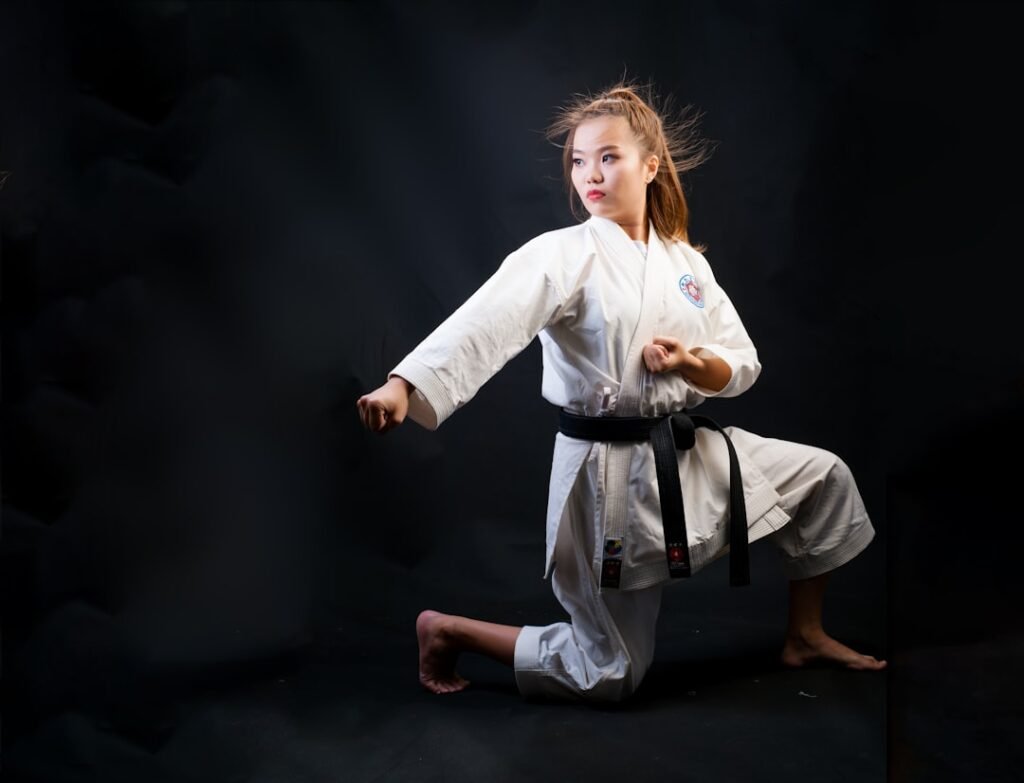
There is a moment every martial arts parent recognizes — the one where you stop watching your child practice a technique and start watching them become someone. It happened for me on an ordinary Tuesday evening during class. My 10-year-old was struggling with a combination he had been drilling for weeks. His shoulders were tight, his frustration was visible, and I could see him fighting the urge to quit mentally even while his body kept moving. Then something shifted. He slowed down, breathed, reset — and executed it cleanly. He didn’t look at me for approval. He looked inward. That is Tang Soo Do doing its work.
When families in Connecticut ask me whether martial arts is worth the commitment, I always tell them the same thing: Tang Soo Do is not a sport your child does a few hours a week. It is a framework for how they grow. The physical training is real and rigorous, but it is the vehicle — not the destination. What your child is actually building is a version of themselves that handles pressure better, respects others more deeply, and pushes through difficulty with grit and grace.
Let me walk you through what that development actually looks like across the ages and stages we experience in our own family.
The Physical Foundation: Building Bodies That Are Strong and Controlled
Tang Soo Do is a Korean martial art with deep roots in traditional striking techniques — kicks, punches, open-hand strikes, and blocks executed with precision and power. For children, the physical training does something that most sports simply cannot replicate: it demands full-body awareness. Every stance requires a child to know where their feet are. Every kick requires them to understand their center of gravity. Every form — called a hyung — requires them to move with intention from beginning to end.
My 6-year-old is still developing basic coordination, and Tang Soo Do meets him exactly where he is. His classes focus on large motor movements, simple stances, and learning to listen to his body. By contrast, my 15-year-old is training with a level of physical sophistication — speed, power generation, and controlled sparring — that rivals any athletic program in our area. The art scales beautifully with development.
Beyond the techniques themselves, consistent training builds real, functional fitness: flexibility, core strength, balance, and cardiovascular endurance. These are not incidental side effects. They are built deliberately into every class. And unlike some team sports where less athletic children can get lost in the shuffle, Tang Soo Do is individual in a way that guarantees every child is being challenged at their own level.
The Mental Edge: Focus, Discipline, and the Ability to Reset
Ask any teacher, and they will tell you that the ability to focus is one of the most valuable skills a child can possess. Tang Soo Do builds that skill systematically and without the child even realizing it is happening.
In the dojang, distractions are stripped away. There are no phones, no screens, no casual conversations while class is in session. A student must listen to instruction, retain it, and apply it — often under physical fatigue. This trains the brain in ways that carry directly into the classroom and into life.
My 12-year-old has told me that when he is stressed before a test at school, he uses the same breathing reset he uses before a sparring match. That is not a coincidence. That is a skill that was built through hundreds of repetitions on the mat. The mental discipline of Tang Soo Do is not taught in a lecture — it is forged through practice.
There is also something powerful about the structure of martial arts progression. Every goal is clearly defined. Every rank requires specific demonstrated competence. Children learn that effort over time produces measurable results, and that there are no shortcuts. In an age of instant gratification, that lesson is genuinely countercultural — and profoundly valuable.
The Moral Core: Respect, Humility, and Character That Sticks
This is where Tang Soo Do diverges most sharply from recreational sports, and it is the piece that resonates most deeply with my faith as a Christian mother raising four boys. Tang Soo Do has always carried a moral framework at its center. The tenets of the art — including courage, concentration, endurance, honesty, and humility — are not decorative. They are woven into every class.
Students bow when they enter and leave the dojang. They address instructors with respect. They help younger or newer students. They are taught explicitly that their growing physical capability comes with growing moral responsibility. My boys understand that Tang Soo Do skill is never for showing off, never for intimidation, and never for aggression outside of sanctioned training. That understanding shapes who they are as young men.
As a believer, I see these values as entirely consistent with how I want to raise my children. Proverbs 22:6 tells us to train up a child in the way he should go. Tang Soo Do is one of the most consistent and structured tools I have found for doing exactly that — instilling values through action, not just words. When my son bows to his instructor with genuine respect, that is a character habit being formed. Repeated enough, it becomes who he is.
The World Tang Soo Do Association places significant emphasis on the moral culture of the art alongside its physical curriculum, and that intentionality is something families can feel the moment they walk into a quality dojang.
Development at Different Ages: What to Realistically Expect
One of the questions I hear most often from Connecticut parents is: When is the right age to start? The honest answer is that Tang Soo Do has something real to offer at every developmental stage, but what that looks like changes significantly.
- Ages 4–7: At this stage, the primary goals are listening skills, body awareness, following directions, and learning to participate in a structured group setting. Techniques are simplified, classes are shorter, and the emphasis is on positive participation. My 6-year-old is thriving in this environment — he is learning what it means to be a student before he is learning how to be a martial artist.
- Ages 8–12: This is where the character work becomes visible and measurable. Children in this range can absorb more complex technique, begin learning hyungs with real depth, and start understanding the philosophy behind what they are doing. This is also the age where plateaus happen — and where learning to push through them becomes one of the most important lessons the dojang offers. If you want to read more about navigating those tough stretches, this post on handling plateaus and setbacks in martial arts goes deeper into that topic.
- Ages 13–17: Teenagers bring more power, more emotional complexity, and more capacity for real mastery. At this stage, Tang Soo Do becomes a genuine identity anchor for many young men and women. My 15-year-old has found in martial arts a source of confidence and self-respect that no other activity has provided in the same way. He is also beginning to mentor younger students — which is teaching him leadership in the most organic way possible.
Training Together: Why the Family Dojang Model Works
One of the things I love most about our martial arts journey is that we do it together. Training as a family changes the dynamic in meaningful ways. My boys see me working hard and struggling and improving alongside them. They do not see martial arts as something their parents signed them up for — they see it as something we all chose and something we all share.
There is accountability in that. There is also an uncommon kind of respect that develops between parents and children who sweat through the same drills and encourage each other through the same hard moments. If you are weighing whether to train alongside your kids or just drop them off and watch, I would encourage you to consider the mat. You will not regret it.
Research consistently supports the broad benefits of martial arts for youth development, and organizations like the Amateur Athletic Union have long recognized martial arts as a legitimate pathway for developing athletic character in young people — not just athletic skill.
The Long View: Raising Children, Not Just Training Them
Tang Soo Do is not a quick fix. It is a long road, and that is exactly the point. The child who earns a black belt in Tang Soo Do has not just learned to kick and punch. They have learned to show up consistently. They have learned to be humble enough to receive correction. They have learned that the work is never truly finished and that growth is always possible. They have learned to bow — to their instructors, to their training partners, and in a real sense, to something larger than themselves.
Those are not martial arts lessons. Those are life lessons. And for our family, they are faith lessons too — reminders that discipline, humility, and perseverance are not just virtues worth teaching. They are virtues worth living. If your family is on this journey, keep going. The mat is building more than you can see right now, and what is being built will last far longer than any trophy or belt.
