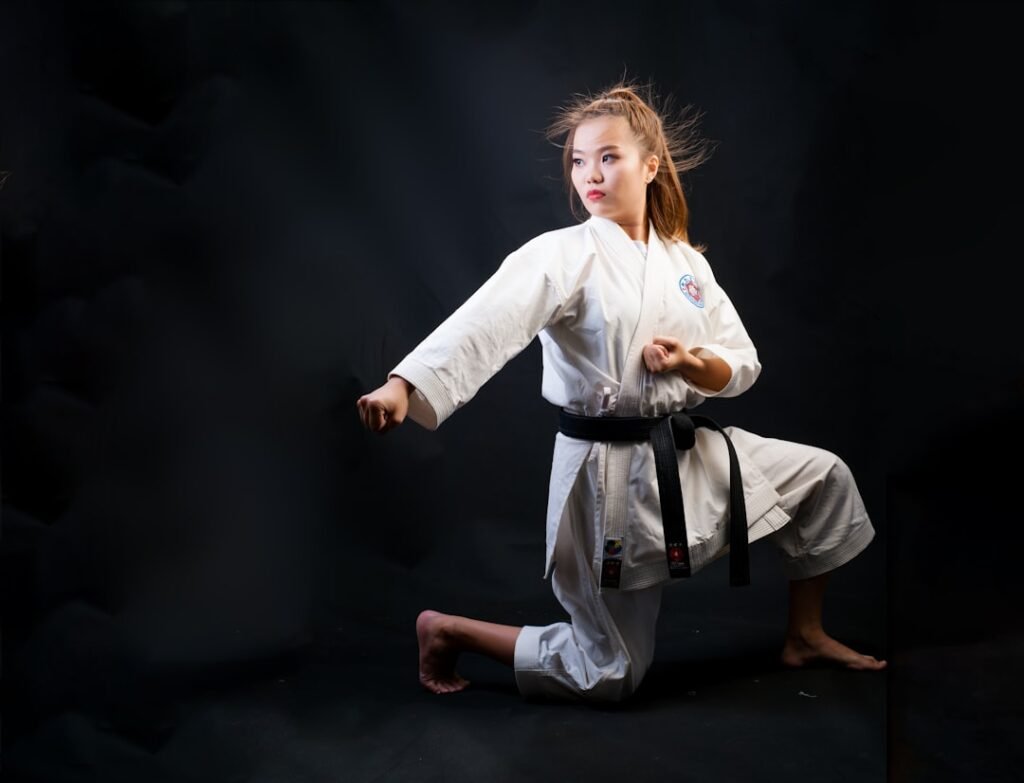
My 12-year-old plays soccer. My 15-year-old runs track. My 10-year-old has tried just about every recreational sport our town offers. And every single one of their coaches — without fail — has said some version of the same thing: “Whatever you’re doing with those kids, keep doing it.” They’re talking about Tang Soo Do. They just don’t always know it yet.
There’s a common misconception among Connecticut parents that martial arts and team sports are competing priorities — that you have to choose one or the other. I used to field that question constantly at the sidelines. But after years of watching my boys move between the dojang and the soccer field, the track, the gym, and the pool, I’ve come to see Tang Soo Do not as a competitor to other sports, but as the single best athletic foundation any child can have. Here’s why.
Body Awareness and Coordination That Transfers Everywhere
One of the first things Tang Soo Do develops — even in young students — is proprioception: the body’s ability to sense where it is in space. When my 6-year-old practices his front snap kick, he’s not just learning to kick. He’s learning to balance on one leg, control his hip rotation, and coordinate his upper and lower body simultaneously. That same coordination shows up when he’s dribbling a basketball or navigating a crowded soccer field.
Traditional hyungs (forms) are especially powerful for this. Performing a form requires a child to memorize sequences, execute precise movements, and maintain body control from start to finish. The discipline of drilling these movements builds neural pathways that genuinely make children more athletically capable across the board. It’s not magic — it’s repetition with intention, and it pays dividends in every sport they touch.
Explosive Power, Flexibility, and Balance — The Athletic Trifecta
Ask any athletic trainer what separates good young athletes from great ones, and they’ll usually land on three things: explosive power, flexibility, and balance. Tang Soo Do trains all three, consistently, from white belt onward.
The dynamic stretching and kicking drills that are staples of every Tang Soo Do class directly improve hip flexor flexibility and hamstring range of motion — two areas that are notoriously tight in young athletes who play field and court sports. My 15-year-old’s track coach actually commented on his stride length after his first season of serious Tang Soo Do training. That’s not coincidence.
The single-leg balance work embedded in kicking combinations? It’s essentially the same training that sports physical therapists prescribe for injury prevention. Strong ankles, stable hips, and a grounded center of gravity are gifts that Tang Soo Do quietly gives every student — benefits that protect kids from the kinds of sports injuries that sideline young athletes every season.
Mental Toughness That Shows Up Under Pressure
Physical skills are only part of the story. Where martial arts training really separates itself is in the mental game. The ability to stay calm, focused, and composed under pressure is something coaches across every sport desperately want from their players — and it’s something Tang Soo Do builds deliberately.
Think about what we ask of our kids in the dojang. They have to perform in front of their instructor, their peers, and sometimes a room full of parents. They have to execute techniques precisely when they’re tired. They have to maintain respect and composure even when they make mistakes. They learn to treat a failed attempt not as a reason to shut down, but as information to adjust and try again.
That mindset doesn’t stay inside the dojang walls. My 12-year-old brought it to his soccer team when they were down two goals in the second half. He told me afterward that he just kept thinking about what his instructor always says: stay focused on what’s in front of you, not what’s already happened. They came back and tied the game. That’s Tang Soo Do showing up on the soccer field.
If you want to dig deeper into how martial arts builds this kind of mental resilience in kids, I’ve written about managing nerves and building confidence through martial arts training — it’s one of the most practical pieces I’ve put together on this topic.
Discipline and the Habit of Deliberate Practice
One of the quieter gifts Tang Soo Do gives young athletes is the habit of deliberate practice — the understanding that showing up and going through the motions isn’t enough. You have to be present. You have to focus on getting better, not just getting through.
This is actually a documented athletic development principle. Research consistently shows that young athletes who engage in structured, skill-focused practice — the kind that demands attention and intentional correction — develop faster and more durably than those who just play lots of games. Tang Soo Do is deliberate practice by design. Every class, every drill, every form repetition asks a child to be mentally engaged, not just physically active.
The Amateur Athletic Union and youth sports development organizations consistently emphasize the value of foundational motor skill training in early childhood — exactly the kind of training Tang Soo Do provides before kids ever set foot in a specialized sport environment.
Respect for Coaches and Teammates Starts in the Dojang
Every parent who has watched youth sports has seen a kid argue with a referee, ignore a coach’s instruction, or sulk after a mistake. It’s normal — kids are learning. But martial arts families tend to raise children who handle these moments differently, and it comes directly from dojang culture.
In Tang Soo Do, respect for your instructor is non-negotiable. You bow when you enter. You listen when you’re corrected. You encourage your training partners. You do not quit when it gets hard. These aren’t rules that get enforced in a punitive way — they’re habits that become part of who your child is. And coaches in every other sport notice it immediately.
I’ll be honest: this is one of the parts of martial arts that aligns most deeply with our faith. Proverbs 13:18 says, “Whoever ignores instruction comes to poverty and shame, but whoever heeds reproof is honored.” The teachable spirit that Tang Soo Do cultivates is one of the most valuable things we can give our children — not just for sports, but for life. Raising boys who receive correction with humility and respond with effort is something I pray over constantly, and I’ve watched the dojang reinforce that work in ways I couldn’t have anticipated.
What This Looks Like for Multi-Sport Families in Connecticut
If you’re managing a household with multiple kids across multiple activities — which describes about half the families I know in Connecticut — you might be wondering how martial arts fits into an already full schedule. Here’s what I’ve found: Tang Soo Do doesn’t compete with other sports. It amplifies them.
We’ve found that even two classes a week produces noticeable results. The key is consistency over intensity. You don’t need to choose between Tang Soo Do and soccer, or between the dojang and swim team. You need to choose consistency in the dojang, and watch the benefits spread to everything else your child does.
- Better focus — kids who train in martial arts tend to lock in faster during team practices
- Better body control — coordination and spatial awareness improve across all athletic activities
- Better coachability — the habit of receiving and applying instruction transfers seamlessly
- Better composure — pressure moments in games become manageable, not overwhelming
- Better injury resilience — flexibility, balance, and body awareness reduce common sports injuries
For families who are new to martial arts and wondering what to look for in a quality program, the World Tang Soo Do Association is a great place to start — their member schools uphold consistent standards of instruction and character development that matter enormously for young athletes.
And if you’re thinking about how Tang Soo Do fits alongside your child’s current sports commitments, I’d encourage you to read about what to look for in a quality martial arts school in Connecticut — finding the right fit makes all the difference.
The Best Cross-Training Investment You Haven’t Made Yet
If you have a child who plays any sport — or a child who hasn’t found their sport yet — Tang Soo Do is one of the most powerful investments you can make in their athletic future. It builds the physical foundation, the mental framework, and the character habits that make children not just better athletes, but better competitors, better teammates, and better young people.
My boys didn’t just get better at kicking and punching. They got better at everything. And that’s not something I expected when we first walked into the dojang — but it’s one of the greatest gifts this journey has given our family. Whatever sport your child loves, Tang Soo Do will help them love it better.
