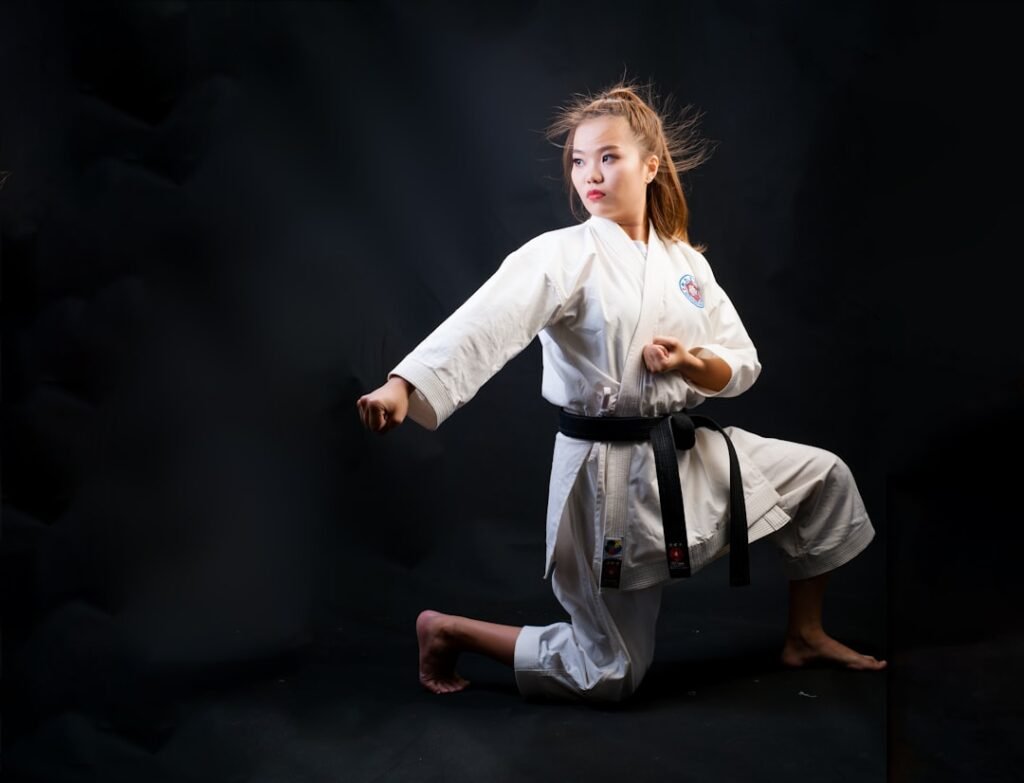
When I first walked my boys into a Tang Soo Do dojang, I was honestly just looking for something to burn off some energy and teach them a little self-discipline. What I found — and what our whole family has found over years of training together — was something far bigger than I ever expected. Tang Soo Do doesn’t just teach kids how to kick and punch. It develops the whole child: body, mind, and character, all at once. And as a mom who cares deeply about raising boys into strong, grounded, God-honoring young men, that matters more to me than any trophy on the shelf.
If you’re a Connecticut family on the fence about martial arts, or maybe you’re already training and wondering why it feels like so much more than a sport, I want to walk you through exactly what’s happening when your child steps onto that mat. Because there is a lot happening — and it’s all good.
The Physical Side: Building Real, Functional Fitness
Let’s start with the obvious: Tang Soo Do is a physically demanding discipline, and it builds the kind of fitness that transfers into everyday life. We’re not talking about running on a treadmill or lifting weights in isolation. Tang Soo Do develops coordination, flexibility, balance, core strength, and cardiovascular endurance — all through purposeful movement that kids actually find exciting.
My 6-year-old is still working on the fundamentals, but even at his age, I can see the difference in his posture, his balance, and his body awareness. My 15-year-old, who has been training for years now, moves with a confidence and physical control that I genuinely believe he would not have developed through any other activity. Tang Soo Do’s emphasis on precise technique means your child isn’t just getting fit — they’re learning how their body works.
The kicking combinations, the forms training, the one-step sparring — every element of class works multiple muscle groups and demands real concentration. Kids who train consistently tend to be more physically capable across the board, which is one reason so many Connecticut families find that Tang Soo Do complements other sports and activities beautifully rather than competing with them.
The Mental Side: Focus, Discipline, and Emotional Regulation
Here’s where parents often tell me they see the most dramatic change — and it usually shows up at home before they even realize it’s happening at the dojang.
Tang Soo Do demands focused attention. When a child is learning a hyung — a formal pattern of movements — they cannot be thinking about what’s for dinner or what game they want to play later. They have to be present. Fully present. That kind of mental discipline, practiced consistently over months and years, rewires how a child approaches concentration in every area of life.
My 10-year-old used to struggle to sit still long enough to finish homework without five reminders. What I’ve watched happen through training is genuinely remarkable. He’s learned — through repetition and expectation in the dojang — that focused effort produces results. That lesson doesn’t stay on the mat. It follows him to the kitchen table, to the classroom, and into how he handles challenges in general.
Beyond focus, Tang Soo Do teaches emotional regulation in a physical setting, which is something most kids desperately need. Sparring, in particular, puts children in situations where they feel pressure, frustration, or nerves — and they have to learn to breathe through it, stay composed, and keep going. That is not a small thing. That is life preparation.
The World Tang Soo Do Association emphasizes mental and moral development as core pillars of the art alongside physical skill — and that integrated philosophy is exactly what sets Tang Soo Do apart from purely athletic pursuits.
The Moral Side: Character That Grows From the Inside Out
This is the part that matters most to me as a Christian mom, and it’s the part I want every family considering martial arts to understand: Tang Soo Do is, at its foundation, a moral discipline.
The tenets we train under — integrity, concentration, perseverance, respect, and self-control — are not just words on a wall. They are woven into every class. A child bows when they enter and exit the dojang. They address instructors with respect. They encourage their fellow students rather than tearing them down. They are expected to hold themselves to a standard that has nothing to do with winning or losing.
As a family of faith, my husband and I have found that these values align beautifully with what we’re already teaching at home and at church. Proverbs 22:6 tells us to train up a child in the way he should go, and we see Tang Soo Do as one of the tools God has placed in our hands to do exactly that. Not because martial arts is a substitute for faith — it never will be — but because it is a structured, consistent environment where virtues are practiced and held to account. That’s rare, and it’s precious.
My 12-year-old is at an age where peer influence is enormous and identity is being shaped in real time. Having a community of training partners, an instructor he respects, and a personal standard to live up to has given him an anchor. I don’t take that lightly.
How Development Looks Different at Different Ages
One of the beautiful things about Tang Soo Do as a family martial art is that it meets each child where they are developmentally. Here’s what I’ve observed across my own four boys:
- Young children (ages 5–7) are developing body awareness, listening skills, and the concept of following structured instruction. At this stage, Tang Soo Do is about planting seeds — of respect, of discipline, of joy in physical movement. Don’t expect perfection; watch for the small wins.
- Elementary-age children (ages 8–11) begin to grasp the deeper “why” behind what they’re learning. They can memorize hyungs, engage with the meaning of their rank, and start connecting their training to their behavior outside the dojang.
- Preteens (ages 12–13) benefit enormously from the identity-forming aspects of martial arts. A belt they earned through real effort means something in a season when everything else can feel uncertain. Their training community becomes a stabilizing force.
- Teenagers (ages 14 and up) are capable of deep, disciplined practice and often become leaders in the dojang. The responsibility of rank and the mentorship of younger students builds maturity that is hard to replicate elsewhere.
Every stage matters. Every stage builds on the one before it. And that’s why families who train together tend to stay together — because there is always something meaningful happening on that mat, no matter how old you are.
What Parents Can Do to Reinforce Development at Home
The dojang does a lot of heavy lifting, but parents can powerfully reinforce what’s being built during training. Here are a few things that have worked for our family:
- Talk about the tenets at dinner. Ask your child which tenet they practiced today — or which one they struggled with. Make it a real conversation, not a quiz.
- Acknowledge the process, not just the result. When your child struggles with a new technique or doesn’t pass a belt test the first time, celebrate their persistence, not just their achievement.
- Model what you’re asking them to practice. Respect, self-control, perseverance — these aren’t just kid lessons. If you’re training alongside your children, let them see you work through your own challenges on the mat.
- Connect dojang behavior to home behavior. “Remember how Instructor expects you to listen the first time? That’s what I’m asking at home, too.” The bridge matters.
If you want to go deeper on how to support your child through the harder seasons of training — plateaus, setbacks, tough days — this post on handling setbacks in martial arts has a lot of practical encouragement for parents.
Why Tang Soo Do Is Worth the Long Commitment
Tang Soo Do is not a quick-fix program. There are no shortcuts to a black belt, and there shouldn’t be. The length of the journey is part of the point. Children who train in Tang Soo Do over years develop something that cannot be rushed: a deep, earned confidence that comes from knowing they kept going when it was hard.
The Amateur Athletic Union and youth development researchers consistently affirm that long-term participation in structured physical disciplines — especially ones with a strong values component — produces measurable benefits in academic performance, social development, and emotional resilience. What they describe in research terms, I’ve watched happen in real time with my four boys.
If you’re a Connecticut family looking for something that builds more than athletic skill — something that shapes who your child is becoming — Tang Soo Do is worth every early morning, every long drive to the dojang, and every hard conversation about not quitting when the belt test feels impossible. The whole child is being developed. Every single class.
And as a mom who has watched it happen four times over, I can tell you with confidence: it is absolutely worth it.
