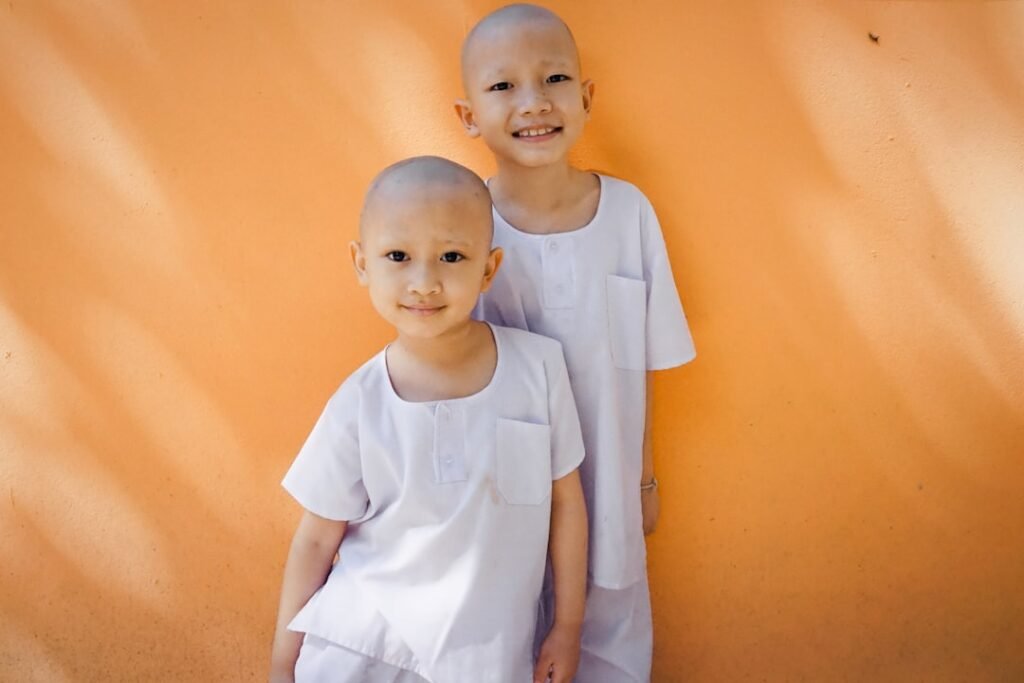
There’s a moment that happens in the dojang — and if you train with your kids, you’ve probably seen it. Your child walks in distracted, maybe a little grumpy, backpack barely off their shoulder. Forty-five minutes later, they bow out, standing taller. Something shifted. Their eyes are clearer. They’re more present. You didn’t lecture them. Nobody handed them a worksheet. They just trained.
That transformation doesn’t happen by accident. It’s baked into the structure of Tang Soo Do itself. And the more I’ve trained alongside my boys — my 6-year-old finding his footing, my 10-year-old pushing through frustration, my 12-year-old learning to lead, and my 15-year-old developing real mental toughness — the more convinced I am that Tang Soo Do isn’t just a physical activity. It is one of the most complete tools for child development I’ve ever encountered.
I want to break down exactly why — because I think a lot of Connecticut families underestimate what’s really happening when their child steps onto that mat.
Physical Development That Goes Far Beyond Fitness
Yes, Tang Soo Do builds strength, flexibility, and coordination. But the physical benefits go much deeper than what you’d get from a gym class or a recreational sport. Tang Soo Do training demands precise, deliberate movement — which means kids aren’t just getting their bodies moving, they’re developing body awareness, spatial reasoning, and fine motor control that carry over into every other physical activity they do.
My 6-year-old has improved his balance and coordination dramatically since he started training. Things that used to frustrate him — like catching a ball or riding his bike — became easier as his body awareness grew. That’s not a coincidence. The stances, the forms, the chamber positions — they build a kinesthetic intelligence that most kids his age simply don’t have yet.
For older kids, the physical demands shift. My 15-year-old is developing real athletic strength through his training — explosive power in his kicks, controlled tension in his strikes, and the kind of full-body conditioning that complements every other sport he plays. Tang Soo Do develops the entire athlete, not just one set of muscles or one type of movement.
The Mental Game: Focus, Discipline, and Emotional Regulation
One of the things parents notice quickly — sometimes within just a few weeks of training — is that their child’s focus improves. Not just in the dojang. At home. At school. At the dinner table. This isn’t magic. It’s the direct result of what Tang Soo Do demands from a student’s mind every single class.
In Tang Soo Do, students must hold multiple things in their heads simultaneously: their stance, their technique, the sequence of a form, the instruction being given by their instructor. They must listen carefully, respond quickly, and self-correct. That’s a cognitive workout. And like any workout, the more you do it, the stronger those mental muscles become.
Emotional regulation is another huge piece of this. My 10-year-old is wired to get frustrated quickly when something doesn’t click. Tang Soo Do has been one of the most effective teachers he’s ever had in managing that. Because in the dojang, frustration is not optional — it is a guaranteed part of the process. You will not get a technique right the first time. You will not perform your hyung perfectly every run-through. The art requires you to sit with the discomfort of imperfection and keep going anyway. Over time, that becomes a life skill.
If you want to read more about how we’ve navigated those harder moments on the mat, I wrote about handling setbacks in martial arts and what they teach our kids — it gets into the plateau moments and failed tests that have actually shaped my boys more than their successes.
Character Formation: Respect, Humility, and Personal Responsibility
I’ll be honest with you — this is the piece that matters most to me as a mom and as a Christian. I can find plenty of ways to keep my kids physically active. What I can’t find everywhere is a structured environment that actively and intentionally builds character alongside fitness.
Tang Soo Do does this through its very culture. The bowing. The “yes sir, yes ma’am.” The expectation that you show up on time, in a clean uniform, ready to work. The respect shown to instructors, to senior belts, to training partners. These aren’t just customs — they are daily practice in values that I desperately want my boys to carry with them. Humility. Gratitude. Service to others.
My 12-year-old has been one of the most dramatic examples of this in our family. He started as a kid who struggled with authority and didn’t naturally defer to adults. The dojang didn’t break him — it channeled him. It gave him a structure where respect wasn’t demanded through fear but modeled through relationship. He watched his instructors earn respect. He learned to do the same. That shift has been extraordinary to watch.
The World Tang Soo Do Association outlines a code of ethics and set of guiding principles that are woven into the very fabric of the art — and those principles don’t stay in the dojang. They come home with your kids.
Social Development and Learning to Be Part of Something Bigger
Children today are growing up in an increasingly isolated, screen-centric world. The dojang is a counterculture. It is a room full of people of different ages, different skill levels, and different backgrounds — all working toward shared goals, helping each other grow, and celebrating each other’s wins.
My boys have built some of their most meaningful friendships in the dojang. And those friendships are different from school friendships — they’re forged in shared challenge. When you’ve sweated through a difficult class together, pushed each other through a hard form, or encouraged a training partner before a belt test, you build something real.
There’s also something powerful about training in a multi-age environment. My 6-year-old looks up to the older kids. My 15-year-old is learning how to lead younger students. That dynamic doesn’t happen in most youth activities, where kids are sorted exclusively by age. In Tang Soo Do, the older students have a responsibility to set the tone — and that responsibility shapes them just as much as the physical training does.
Faith, Purpose, and the Long View of Martial Arts
As a Christian mom, one of the things I appreciate most about Tang Soo Do is how naturally it aligns with a faith-centered approach to raising children. The art asks its practitioners to be humble, to serve others, to work hard without seeking recognition, to treat every person in that room with dignity. Sound familiar?
I’m not claiming Tang Soo Do is a religious practice — it isn’t. But the values it instills are deeply compatible with the values I’m trying to build at home and at church. When my boys train, they are practicing patience, perseverance, and self-control in a physical, tangible way. They are learning that real strength isn’t about dominating others — it’s about mastering yourself. That’s a lesson I’m constantly trying to teach at home, and the dojang reinforces it every single week.
We also talk a lot as a family about the long view. Martial arts is not a quick-results activity. There are no shortcuts to a black belt. You earn every rank through consistent, faithful effort — and that mirrors something deeply true about life. Growth takes time. Character is built in the small moments. Showing up when you don’t feel like it matters.
For families thinking about the deeper values framework behind the art, I’d encourage you to explore the spiritual and moral framework of Tang Soo Do — it’s something that surprised me when we first started this journey, and it’s become one of my favorite things to share with other families.
What This Means for Your Family
If you’re a Connecticut family considering martial arts — or you’re already training and wondering why it feels like so much more than just a class — this is why. Tang Soo Do works on every level simultaneously. It builds strong bodies, sharp minds, and grounded character. It gives children a community, a code, and a practice that asks everything of them and gives back even more.
You don’t have to be an athlete to benefit. You don’t have to be naturally disciplined. In fact, Tang Soo Do is most transformative for the kids who walk in with the most to work on — the distracted ones, the frustrated ones, the ones who need structure and haven’t found it yet. The art meets them where they are and walks them forward.
Whatever age your child is, whatever their personality or starting point, Tang Soo Do has something to offer them. And if you train alongside them — even just occasionally — you’ll find it has something to offer you too. The mat is a great equalizer. We’re all works in progress out there. And that, honestly, is one of my favorite things about it.
